

|
Listen to Blog Post
Getting your Trinity Audio player ready...
|

The Math Wars in Education that Nobody is Winning
There is a debate happening in schools across the country, the math wars in education, and chances are you’ve heard it, maybe even refereed it. Old math versus new math. Traditional algorithms versus number talks. Direct instruction versus exploration. The arguments are loud, the opinions are passionate, and somehow, after decades of fighting, our students are still struggling.
But here’s what I’ve been sitting with lately: what if we’ve been arguing about the wrong thing entirely?
I was a gifted math student. I scored well on every test, was placed in advanced courses, and checked every box the system had set for success. By every external measure, mathematics and I had a great relationship. Then I got to college.
And I realized I had no idea how to think mathematically.

math development
What mathematics was always supposed to develop — but rarely did:
Reasoning through problems you’ve never seen before, communicating your thinking with clarity and confidence, strategizing when the path forward isn’t obvious, persevering when the answer doesn’t come quickly
- The debate isn’t really about curriculum. It’s about what we believe math class is for — and until we answer that question honestly, no curriculum, framework, or set of standards will save us.
- The question stops being “should we teach the standard algorithm?” and starts being “are students reasoning, or just executing?”
The Real Question
This is the conversation math instructional leaders need to be having with their teams: not which curriculum wins, but what we believe math class is actually for. When we get clear on that, the debate starts to dissolve.
“It’s not new math. It’s not old math. It’s just math, finally taught the way it deserved to be.”
I didn’t know how to reason through a problem I’d never seen before. I couldn’t communicate my thinking with any clarity or confidence. I had been rewarded, for years, for performing math, not for doing it.
That realization changed everything for me. What I see in schools isn’t a battle between two philosophies. It’s two different versions of the same fundamental mistake: teaching mathematics as a collection of procedures rather than as a discipline of thinking, reasoning, and sense-making.
We didn’t break math education when we updated the standards. We just made the original break more visible.
The generations coming up behind us deserve mathematics education that treats them as thinkers. Not because it’s trendy. Not because the standards changed. But because that’s what math always was — and somewhere along the way, we taught it like it wasn’t.
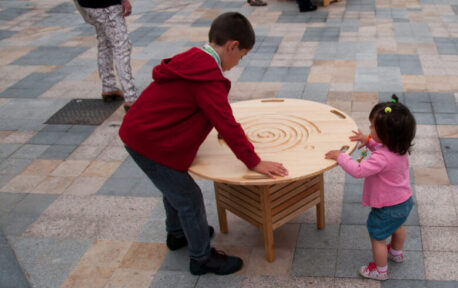
“We didn’t break math education when we updated the standards. We just made the original break more visible.”
So Let’s Start There
Bring this question to your team this week: What do we believe math class is actually for? Not what the standards say. Not what the curriculum guide suggests. What do we believe? Write down what comes up. Notice where there’s alignment and where there’s tension. That conversation alone will tell you everything you need to know about your next step.
If you’re ready to go deeper, I work with math instructional leaders to build the kind of team culture where these conversations don’t just happen once — they become the foundation of everything. Let’s connect at Work with me →.
Further Reading
If this resonated with you, these books are essential reading for math instructional leaders who want to go deeper:
- Building Thinking Classrooms in Mathematics, Grades K-12 by Peter Liljedahl
- 5 Practices for Orchestrating Productive Mathematics Discussions by Margaret Smith & Mary Kay Stein
- Becoming the Math Teacher You Wish You’d Had by Tracy Johnston Zager
- Making Sense: Teaching and Learning Mathematics with Understanding by James Hiebert et al.
Note: Some links above are affiliate links.
About Me
Dr. Elly Blanco-Rowe is an educational consultant and math instructional leader with over 20 years of experience. Her work centers on math equity, instructional coaching, and supporting math leaders through her Explore-Reflect-Reframe framework. Learn more at www.ellyblancorowe.com.